Watercolor Wildflowers Graphics: A Comprehensive Guide to Botanical Design Assets
The integration of organic, hand-painted elements into digital and physical design projects has seen a significant resurgence in recent years. Among the most versatile assets available to modern creators are Watercolor Wildflowers Graphics. These botanical illustrations bridge the gap between traditional fine art and contemporary graphic design, offering a softness and authenticity that vector art often cannot replicate. When utilizing a collection where cute little wild flowers have been hand-painted in watercolor, designers gain access to a unique aesthetic vocabulary that speaks to nostalgia, nature, and artisanal quality. Understanding the technical specifications, creative applications, and strategic implementation of these graphics is essential for professionals and hobbyists aiming to elevate their visual output.
Technical Specifications and Print Readiness
The foundation of any high-quality design asset lies in its technical construction. For Watercolor Wildflowers Graphics to be truly effective across various media, they must adhere to strict resolution standards. The industry benchmark for this type of botanical clipart is 300 DPI (dots per inch). This resolution ensures that when the image is printed on physical goods—ranging from heavy cardstock invitations to textile packaging—the edges remain crisp and the color gradients retain their subtle watercolor bleeding effects without pixelation.
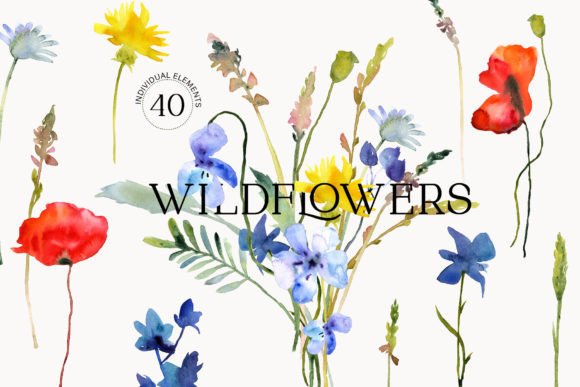
File format is equally critical. High-resolution PNG files are the preferred delivery method for hand-painted florals because they support transparent backgrounds. Unlike JPEGs, which force a white or colored box around the subject, PNGs allow the intricate, semi-transparent washes of watercolor paint to blend seamlessly with any underlying design. In a comprehensive set containing 40 individual watercolor flowers, this transparency allows for infinite layering possibilities. Designers can overlap stems, create dense bouquets, or scatter isolated blooms across a layout without needing advanced masking skills in post-production software. This technical accessibility democratizes professional-grade design, making it feasible for users with varying levels of expertise to achieve polished results.
Applications in Stationery and Event Branding
One of the primary use cases for hand-painted wildflower collections is in the realm of stationery and event branding. Holiday invitations and greeting cards benefit immensely from the organic texture of watercolor. Unlike rigid geometric patterns, wildflowers convey a sense of warmth and personal touch that aligns perfectly with celebratory occasions. The "cute" aesthetic mentioned in many botanical sets suggests a whimsical, approachable style that works exceptionally well for baby showers, spring weddings, and Easter communications.
For event planners and stationers, these graphics serve as modular building blocks. A single set of 40 elements provides enough variety to create a cohesive brand identity across multiple touchpoints. Save-the-dates might feature a sparse scattering of buds, while the formal invitation utilizes a denser arrangement of full blooms. Menus, place cards, and thank-you notes can then incorporate smaller accent flowers to maintain visual continuity. Because the original prints are designed to accommodate text, negative space is inherently built into the composition. This allows typography to sit comfortably among the foliage without competing for attention, ensuring readability remains high even amidst decorative abundance.
Enhancing Digital Planning and Scrapbooking
Beyond print, Watercolor Wildflowers Graphics play a pivotal role in the digital planning and scrapbooking communities. Digital planners used on tablets require assets that feel tactile despite being viewed on a glass screen. Hand-painted florals introduce a necessary organic imperfection that counters the sterile nature of digital interfaces. Users can drag and drop these high-resolution PNGs to customize monthly covers, weekly spreads, and digital stickers.
In digital scrapbooking, the ability to layer 40 distinct flower variations allows for storytelling through botany. Different wildflowers can symbolize different memories or seasons, adding narrative depth to a digital album. Furthermore, because these files are typically 300 DPI, they retain enough detail to be zoomed in for close-up viewing or cropped for specific focal points without losing integrity. This flexibility is crucial for digital creators who need assets that perform well at both thumbnail size and full-screen resolution. The watercolor medium also pairs naturally with digital paper textures, allowing for realistic blending modes that mimic traditional collage techniques.
Commercial Product Development and Packaging
For business owners and product designers, original watercolor prints offer a pathway to distinctive merchandise. Packaging design, in particular, benefits from the artisanal signal that hand-painted graphics emit. In a marketplace saturated with minimalist vector logos, a package adorned with delicate wildflowers stands out as premium and thoughtfully crafted. This is especially relevant for industries such as skincare, tea, confectionery, and sustainable goods, where the packaging must reflect natural ingredients or eco-friendly values.
Textile printing is another significant avenue. The high resolution of these graphics ensures that when transferred onto fabric via sublimation or direct-to-garment printing, the watercolor washes translate into soft, wearable art rather than harsh digital artifacts. Tote bags, scarves, and home textiles featuring wildflower motifs appeal to consumers seeking connection to nature. It is important to note that when using these assets for commercial goods, verifying licensing terms is mandatory. Original prints are perfect for goods and events, but understanding whether the license covers end-products versus digital redistribution protects both the creator and the artist.
Home Decor and Printable Art Markets
The rise of printable home decor has created a robust market for high-quality botanical art. Watercolor Wildflowers Graphics are ideally suited for wall art because the medium’s inherent softness complements interior design trends focused on biophilia and calm. A set of 40 flowers allows for the creation of gallery walls where individual prints relate to one another through style and color palette without being repetitive.
Creators in this space often combine these graphics with inspirational quotes or educational botanical labels. The instruction to "just put your text or quote" highlights the versatility of the artwork as a background or border element. However, successful printable art requires more than just placement; it demands an understanding of color profiles. While PNGs are excellent for digital transfer, designers preparing files for home printing should ensure color consistency across different printer models. The hand-painted nature of the source material means colors are nuanced; maintaining this fidelity in the final print is what separates professional decor from amateur crafts.
Strategic Composition and Design Workflow
Possessing a collection of 40 watercolor flowers is only the first step; mastering their arrangement is where true design value emerges. Effective composition with wildflowers relies on understanding natural growth patterns. Unlike cultivated roses, wildflowers grow in chaotic, asymmetrical clusters. When arranging these graphics digitally, avoid perfect symmetry. Vary the scale, rotation, and opacity of individual elements to mimic how they appear in nature. Some flowers should be in sharp focus while others recede, creating depth of field.
Color harmony is another consideration. Even within a curated set, individual scans may have slight tonal variations due to the handmade process. Rather than viewing this as a flaw, leverage it as a feature. Use adjustment layers to unify the palette if necessary, or embrace the variation to enhance the authentic watercolor feel. For educators and researchers using these graphics in presentations or publications, this organic variation helps break up dense information, making academic or instructional content more engaging and digestible. The psychological impact of botanical imagery has been shown to reduce cognitive load, making these assets functional tools for communication, not merely decoration.
Educational and Therapeutic Uses
The utility of Watercolor Wildflowers Graphics extends into education and therapy. For educators teaching biology or environmental science, accurate yet aesthetically pleasing illustrations can aid in plant identification and appreciation. While photographs document reality, watercolor illustrations can emphasize specific morphological features by simplifying background noise. The "cute" factor also makes these resources accessible for younger audiences, fostering early interest in botany and nature conservation.
In therapeutic contexts, such as art therapy or mindfulness practices, these graphics serve as prompts or coloring bases. The incomplete nature of some watercolor washes invites interaction, encouraging users to engage creatively rather than passively consume content. For occupational therapists working on fine motor skills, arranging digital or physical flower elements can provide a calming, structured activity. The association of wildflowers with open fields and freedom also carries symbolic weight that can be leveraged in mental health resources, journaling templates, and wellness coaching materials.
Maximizing Asset Longevity and Versatility
To get the most value from a set of hand-painted wildflowers, users should adopt a systematic approach to asset management. Organizing the 40 PNG files by color, bloom stage, or orientation saves time during active design sessions. Creating custom brushes or patterns from these source files further extends their utility. A single detailed flower can be sampled to create a seamless pattern for wrapping paper or website backgrounds, multiplying the ROI of the original purchase.
Furthermore, staying attuned to seasonal trends ensures these assets remain relevant year-round. While wildflowers are synonymous with spring, many varieties bloom in late summer or autumn. By pairing these graphics with appropriate typography and color grading, the same set can transition from Easter pastels to harvest tones. This adaptability is key for professionals managing multiple client accounts or product lines. Ultimately, the enduring appeal of Watercolor Wildflowers Graphics lies in their ability to humanize digital spaces and add artisanal value to mass-produced goods. Whether used for a heartfelt greeting card, a sophisticated product label, or an educational worksheet, these hand-painted elements carry an emotional resonance that purely synthetic design cannot achieve. Creating with pleasure becomes a natural outcome when the tools themselves embody beauty, craftsmanship, and technical excellence.