Integrating Teddy Bear Vintage Watercolor Clipart into Professional Creative Workflows
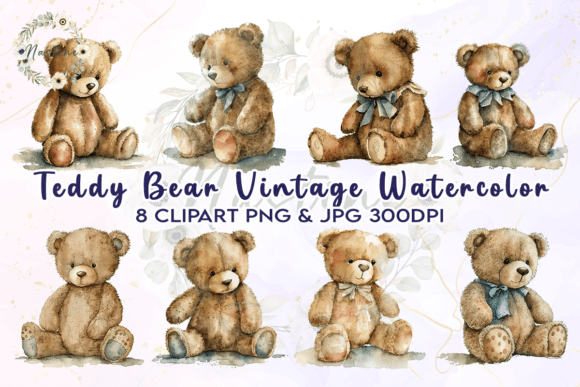
In the landscape of digital design and print-on-demand production, asset quality dictates the ceiling of your final output. For creators, small business owners, and educators, sourcing graphics is not merely about finding an appealing image; it is about securing a reliable component that fits seamlessly into a technical pipeline. Teddy Bear Vintage Watercolor Clipart serves as a versatile visual element that bridges nostalgic aesthetics with modern printing requirements. When incorporated correctly, these assets streamline the creation process for products ranging from apparel to stationery, provided the user understands the technical specifications and workflow integration necessary for professional results.
Technical Specifications and Pre-Production Planning
Before initiating any design project, verifying asset compatibility is a critical step in quality control. This specific collection of Teddy Bear Vintage Watercolor Clipart is engineered for high-fidelity reproduction. You will receive both PNG and JPG files sized at 4000×4000 pixels. This dimension is significant because it provides ample canvas space for resizing without pixelation, ensuring crisp edges on physical products up to approximately 13 inches at full resolution. The files are delivered at 300 DPI (Dots Per Inch), which is the industry standard for commercial printing and sublimation.
A defining feature of the PNG files in this set is the transparent background. In a practical workflow, this eliminates the need for time-consuming masking or extraction processes. For designers using Adobe Illustrator, Affinity Designer, or Canva, transparency allows for immediate layering over textured backgrounds, colored garments, or complex layouts. However, users must understand color management before purchasing. All designs are created in RGB Color Mode at 300 DPI. While many commercial printers prefer CMYK, modern RIP software and sublimation drivers are often optimized to convert RGB files accurately. When preparing your workspace, ensure your software’s color mode is set to RGB and the resolution is locked at 300 DPI to maintain the integrity of the original file. Colors may vary depending on monitor settings and printer profiles, so conducting test prints is always a recommended best practice.
Workflow Integration for Sublimation and Apparel
For entrepreneurs operating in the custom apparel and merchandise space, this clipart functions as a core production asset. Sublimation printing requires specific hardware and file preparation. To utilize these files for sublimation, you must possess a dedicated sublimation printer and a heat press. The vintage watercolor style translates exceptionally well to polyester substrates because the soft gradients and organic edges mimic traditional fabric dyeing rather than sitting heavily on top of the material like vinyl.
When designing T-shirts, sweatshirts, or tumblers, consider the placement and scale of the teddy bear illustration. Because the source file is 4000×4000 px, you can crop tightly for pocket-sized logos or use the full image for back prints without losing detail. In your design software, place the RGB PNG directly onto your mockup template. If you are combining this clipart with text, ensure the typography complements the vintage aesthetic. Serif fonts or hand-lettered scripts typically pair better with watercolor textures than rigid sans-serifs. Always mirror your image horizontally before printing for sublimation transfer, a step that is easily overlooked during high-volume production runs.
Applications in Stationery, Publishing, and Digital Products
Beyond apparel, Teddy Bear Vintage Watercolor Clipart plays a pivotal role in the paper goods and digital planning sectors. For card makers, scrapbookers, and publishers, the high resolution ensures that fine brushstroke details remain visible even when scaled down for A6 or 5x7 inch formats. The transparent background is particularly valuable here, allowing the bear to interact naturally with patterned papers or journal spreads without unsightly white boxes disrupting the layout.
In the realm of digital planners and educational resources, these files serve as decorative anchors. Educators creating worksheets or classroom decor can use the imagery to add warmth and approachability to learning materials. Since the files are digital downloads with no watermark, they are ready for immediate integration into PDF assemblies or interactive notebook templates. For digital product sellers, bundling this clipart with complementary vintage elements can create cohesive themed collections. When organizing your asset library, tag these files with relevant metadata such as "vintage nursery," "watercolor bear," and "RGB 300 DPI" to expedite retrieval during future projects. Efficient asset management reduces friction between the ideation phase and execution.
Quality Control and Software Proficiency
Acquiring high-quality assets is only half the equation; possessing the knowledge to manipulate them is equally important. It is essential to have working knowledge of your chosen software before buying any files. Whether you use Photoshop, Procreate, GIMP, or Silhouette Studio, understanding how to handle 4000px raster images prevents common errors like accidental rasterization of vector layers or improper export settings that degrade quality.
Color consistency remains a primary challenge in digital-to-print workflows. Because these files are RGB, they possess a wider gamut than standard CMYK printing. Most modern sublimation inks and DTG (Direct to Garment) printers handle this conversion automatically, but results can shift based on substrate color and coating. Create a standardized testing protocol: print the teddy bear clipart on your target material using your standard color profile. Compare the physical output against your calibrated monitor. Adjust brightness or saturation curves in your master file if necessary, but avoid altering the original 300 DPI source. Save adjusted versions separately to preserve the pristine master asset for future use across different media types.
Strategic Asset Utilization Across Projects
The versatility of Teddy Bear Vintage Watercolor Clipart extends its value beyond single-use applications. Smart creators view such assets as modular components within a larger design system. For example, the same high-resolution bear used on a toddler’s birthday invitation can be repurposed for thank-you cards, party favor stickers, and matching social media announcements. This cross-platform consistency strengthens brand identity for event planners and small businesses.
For vinyl decal creators, note that while this is a raster watercolor image, it can be adapted for print-then-cut workflows. Unlike solid-color cut vinyl, print-then-cut allows you to retain the intricate shading and texture of the watercolor style. Ensure your cutting machine’s registration marks are calibrated correctly, as the detailed nature of watercolor edges requires precise alignment. Alternatively, use the clipart as a reference for hand-painting or digital tracing if a true vector version is required for large-format signage, keeping in mind that the original purchase grants usage rights for the digital file itself.
Best Practices for Long-Term Asset Management
Digital downloads require disciplined organization to remain useful over time. Upon receiving your PNG and JPG files, store them in a cloud-backed directory structured by theme, resolution, and color mode. Avoid renaming files to generic terms; keep descriptive filenames that include technical specs. This habit pays dividends when scaling operations or collaborating with virtual assistants who need to locate specific assets quickly.
Finally, respect the licensing and technical boundaries of the asset. These files are optimized for RGB digital printing and sublimation. Attempting to use them for offset lithography without proper CMYK conversion may yield muddy colors. Similarly, while 4000×4000 px is substantial, stretching the image beyond its native resolution for billboard-sized prints will result in artifacts. Understanding these parameters ensures that Teddy Bear Vintage Watercolor Clipart remains a reliable, high-performing element in your creative toolkit. By treating digital assets with the same rigor as physical inventory, professionals can maximize ROI, reduce production errors, and deliver consistently beautiful results across mugs, tumblers, journals, wall art, and beyond.