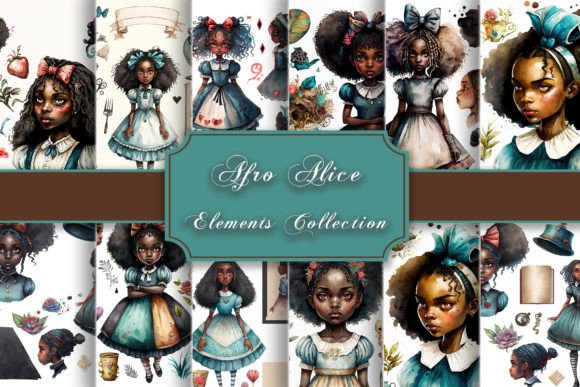
Afro Alice in Wonderland Elements for Creative Projects
Fresh visual storytelling requires assets that feel both timeless and culturally specific. The Afro Alice in Wonderland Elements collection bridges classic literary whimsy with contemporary Black artistry, offering a distinct aesthetic for modern creators. This digital asset pack provides twelve high-resolution JPG files featuring unique characters and motifs set against a single, solid color background. Unlike generic clip art, these elements are designed with intentionality, allowing designers, educators, and entrepreneurs to integrate diverse representation into their work without sacrificing professional polish or versatility.
The technical specifications ensure these assets perform well across both digital and physical mediums. Each file measures 12 inches by 12 inches at 300 DPI, translating to 3600 x 3600 pixels. This resolution is the industry standard for high-quality printing, ensuring crisp edges on business cards and large-format posters alike. For digital creators, this size offers ample room for cropping and resizing without pixelation. The uniform solid background is a deliberate design choice, streamlining the workflow for users who need to isolate specific elements quickly using background removal tools or simple cropping techniques.
Cultural Representation in Whimsical Design
Visual narratives shape how audiences perceive stories and brands. Integrating Afro-centric aesthetics into fantasy themes expands the creative vocabulary available to designers. These elements move beyond standard interpretations of Wonderland, infusing the space with textures, hairstyles, and fashion sensibilities that reflect Black culture. For marketers and bloggers targeting diverse demographics, this specificity builds immediate rapport and authenticity. It signals an understanding that fantasy and whimsy are universal experiences that deserve varied cultural expressions.
Educators and children’s book illustrators will find particular value in this nuanced approach. Creating learning materials or storybooks often requires finding imagery that resonates with students while maintaining a sense of magic and wonder. These assets provide ready-made visual anchors that validate identity within imaginative spaces. Rather than forcing generic assets to fit a specific cultural context, creators can use these purpose-built elements to enhance curriculum materials, classroom decor, or self-published books with confidence and respect.
Practical Applications for Print and Merchandise
The 300 DPI resolution makes this collection exceptionally suitable for tangible products. Small business owners and POD (Print on Demand) sellers can leverage these files for merchandise that stands out in saturated markets. Consider the following applications where high-fidelity print quality is non-negotiable:
- Apparel and Textiles: The 12x12 inch canvas is ideal for center chest prints on t-shirts, sweatshirts, or tote bags. The solid background simplifies heat transfer vinyl cutting or direct-to-garment printing preparation.
- Stationery Suites: Use individual elements as focal points for wedding invitations, birthday cards, or thank-you notes. The scale allows for detailed close-ups on smaller formats like A2 cards without losing clarity.
- Scrapbooking and Journaling: Digital scrapbookers can layer these elements directly into layouts, while traditional crafters can print them at full size for 12x12 album pages or crop them for pocket-sized journals.
- Packaging Design: Enhance product unboxing experiences by incorporating these illustrations onto tissue paper, stickers, or box sleeves. The consistent art style ensures brand cohesion across different packaging touchpoints.
When preparing these files for print, always verify your printer’s color profile requirements. While JPGs are universally compatible, converting to CMYK before production may yield more accurate color reproduction for physical goods. The solid background also serves as a helpful guide for alignment during the printing process, reducing waste and setup time.
Digital Adaptation and Social Media Strategy
Digital platforms demand flexibility, and these square-format assets align perfectly with social media dimensions. Content creators and social media managers can repurpose the 3600 x 3600 px files across multiple channels without creating separate versions. Instagram posts, Facebook ads, and Pinterest pins all utilize square or near-square aspect ratios natively. The high pixel count ensures images remain sharp even after platform compression algorithms process them.
For web designers and bloggers, the solid background offers significant advantages. Isolating the main subject takes seconds with modern AI removal tools, resulting in clean PNGs perfect for overlaying on colored website sections or gradient backgrounds. This modularity allows you to create custom headers, featured images, or sidebar graphics that match your site’s exact color palette. Instead of being locked into the original background color, you gain the freedom to adapt the artwork to any seasonal campaign or brand refresh instantly.
Email marketers can also benefit from these versatile dimensions. Square images often perform better in mobile-first email layouts than wide banners. Using an Afro Alice element as a header image or section divider adds personality to newsletters while maintaining fast load times due to the efficient JPG format. Just ensure you optimize the file size for web delivery; a 3600px image is overkill for email, so resizing to 600-800px width preserves quality while improving user experience.
Workflow Tips for Background Removal and Cropping
Maximizing the utility of this collection depends on efficient asset preparation. Since all twelve files share the same solid background color, batch processing becomes a viable time-saver. If you plan to use multiple elements as transparent overlays, consider setting up an action in Photoshop or a batch process in free alternatives like GIMP or Photopea. This automates the selection and deletion of the background across all files simultaneously, transforming the entire ZIP folder into a library of transparent assets in minutes rather than hours.
Cropping offers another avenue for customization without advanced editing skills. The generous 12-inch canvas means you can extract secondary details—like accessories, patterns, or background flourishes—as standalone elements. A full-character composition might serve as a poster centerpiece, while a cropped detail of clothing texture could function as a subtle pattern fill or border accent. This approach extends the value of each file, effectively giving you dozens of usable components from just twelve source images.
Organization is key when working with themed asset packs. Create a dedicated project folder structure that separates original high-res files from edited derivatives. Naming conventions matter; instead of keeping generic filenames, rename crops and isolated elements descriptively (e.g., "afro-alice-teacup-detail.png" or "wonderland-pattern-border.jpg"). This upfront organization prevents future frustration when searching for specific assets mid-project and ensures you always have access to the pristine master files for new applications.
Maintaining Visual Consistency Across Projects
Using themed elements effectively requires attention to stylistic harmony. Because all twelve Afro Alice in Wonderland Elements share a unified art style and color foundation, they naturally work together. However, when combining them with other assets or typography, maintain that coherence. Select fonts that complement the illustration’s line weight and mood—playful serifs or organic hand-lettered typefaces typically pair better than rigid geometric sans-serifs. Color grading should also be considered; if your project uses a specific filter or overlay, apply it consistently to these elements so they don’t appear pasted on.
Audience expectations vary by context, so adapt the presentation accordingly. A playful, saturated treatment might suit a children’s party invitation, while muted tones and elegant spacing could reposition the same artwork for a sophisticated literary blog or boutique branding. The strength of this collection lies in its balance of specificity and openness; it provides clear cultural and thematic signifiers while leaving enough negative space and compositional flexibility for your unique creative voice to emerge. By treating these elements as collaborative partners rather than mere decorations, you create work that feels intentional, respectful, and genuinely engaging.